 An official website of the United States government
Peppermint Oil
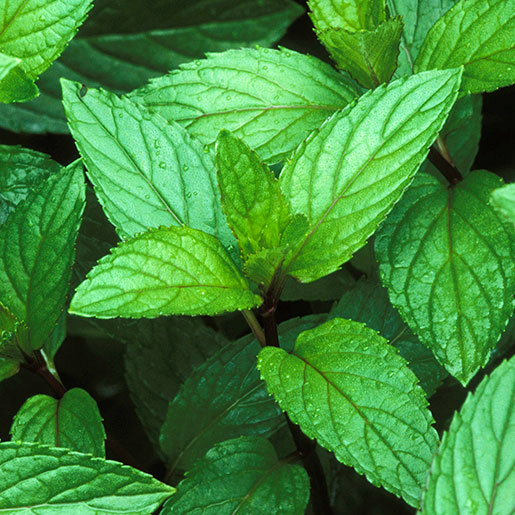
Common Names: peppermint, peppermint oil
Latin Names: Mentha x piperita
Background
- The herb peppermint, a natural cross between two types of mint (water mint and spearmint), grows throughout Europe and North America.
- Both peppermint leaves and the essential oil from peppermint have been used for health purposes. Peppermint oil is the essential oil taken from the flowering parts and leaves of the peppermint plant. (Essential oils are very concentrated oils containing substances that give a plant its characteristic odor or flavor.)
- Peppermint is a common flavoring agent in foods and beverages, and peppermint oil is used as a fragrance in soaps and cosmetics.
- Peppermint has been used for health purposes for several thousand years. Records from ancient Greece, Rome, and Egypt mention that it was used for digestive disorders and other conditions.
- Today, peppermint is promoted for irritable bowel syndrome (IBS), other digestive problems, the common cold, sinus infections, headaches, and other conditions. Peppermint oil is promoted for topical use (applied to the skin) for problems like headache, muscle aches, joint pain, and itching. In aromatherapy, peppermint oil is promoted for treating coughs and colds, reducing pain, improving mental function, and reducing stress.
How Much Do We Know?
- A small amount of research has been conducted on peppermint oil, primarily focusing on IBS.
- Very little research has been done on peppermint leaf.
What Have We Learned?
- A small amount of research suggests that peppermint oil in enteric-coated capsules may improve IBS symptoms in adults.
- One small study suggests that peppermint oil in enteric-coated capsules may reduce abdominal pain in some children.
- A few studies have indicated that specific products containing peppermint oil plus caraway oil and specific combination products that include peppermint leaves may help relieve indigestion. But there isn’t any evidence showing that taking peppermint oil alone can help. In fact, peppermint oil taken alone may worsen indigestion in some people and cause unwanted side effects.
- A limited amount of evidence suggests that peppermint oil applied topically might be beneficial for tension headaches.
- Peppermint oil in a gel, water, or cream applied topically to the nipple area of breastfeeding women might be helpful for reducing pain and cracked skin. Menthol, which is in peppermint oil, should not be inhaled by or applied to the face of an infant or small child because it may negatively affect their breathing. Peppermint oil should therefore be used only after breastfeeding and then wiped off before the next breastfeeding session.
- A small amount of research suggests that peppermint oil might be helpful to reduce spasms during certain procedures, such as endoscopy or barium enema examination.
- There’s not enough evidence to allow any conclusions to be reached about whether peppermint oil is helpful for other conditions.
What Do We Know About Safety?
- Peppermint oil appears to be safe when taken orally (by mouth) or applied topically in the doses commonly used. Peppermint oil has been safely used in many clinical trials.
- Possible side effects of peppermint oil taken orally include heartburn, nausea, abdominal pain, and dry mouth. Rarely, peppermint oil can cause allergic reactions.
- Capsules containing peppermint oil are often enteric-coated to reduce the likelihood of heartburn. If enteric-coated peppermint oil capsules are taken at the same time as antacids, the coating can break down too quickly.
- Side effects of applying peppermint oil to the skin can include skin rashes and irritation. Peppermint oil should not be applied to the face of infants or young children because serious side effects may occur if they inhale the menthol in the oil.
- Little is known about whether it’s safe to use peppermint oil during pregnancy or while breastfeeding.
- Peppermint tea, which is made from peppermint leaves, appears to be safe. However, the long-term safety of consuming large amounts of peppermint leaf is unknown.
Keep in Mind
- Take charge of your health—talk with your health care providers about any complementary health approaches you use. Together, you can make shared, well-informed decisions.
NCCIH Clearinghouse
The NCCIH Clearinghouse provides information on NCCIH and complementary and integrative health approaches, including publications and searches of Federal databases of scientific and medical literature. The Clearinghouse does not provide medical advice, treatment recommendations, or referrals to practitioners.
Toll-free in the U.S.: 1-888-644-6226
Telecommunications relay service (TRS): 7-1-1
Website: https://www.nccih.nih.gov
Email: info@nccih.nih.gov (link sends email)
PubMed®
A service of the National Library of Medicine, PubMed® contains publication information and (in most cases) brief summaries of articles from scientific and medical journals. For guidance from NCCIH on using PubMed, see How To Find Information About Complementary Health Approaches on PubMed.
Website: https://pubmed.ncbi.nlm.nih.gov/
Office of Dietary Supplements (ODS), National Institutes of Health (NIH)
ODS seeks to strengthen knowledge and understanding of dietary supplements by evaluating scientific information, supporting research, sharing research results, and educating the public. Its resources include publications (such as Dietary Supplements: What You Need To Know) and fact sheets on a variety of specific supplement ingredients and products (such as vitamin D and multivitamin/mineral supplements).
Website: https://ods.od.nih.gov
Email: ods@nih.gov (link sends email)
Key References
- Alammar N, Wang L, Saberi B, et al. The impact of peppermint oil on the irritable bowel syndrome: a meta-analysis of the pooled clinical data. BMC Complementary and Alternative Medicine. 2019;19(1):21.
- Anheyer D, Frawley J, Koch AK, et al. Herbal medicines for gastrointestinal disorders in children and adolescents: a systematic review. Pediatrics. 2017;139(6):e20170062.
- Chumpitazi BP, Kearns GL, Shulman RJ. Review article: the physiological effects and safety of peppermint oil and its efficacy in irritable bowel syndrome and other functional disorders. Alimentary Pharmacology & Therapeutics. 2018;47(6):738-752.
- de Groot A, Schmidt E. Essential oils, Part V: peppermint oil, lavender oil, and lemongrass oil. Dermatitis. 2016;27(6):325-332.
- Ford AC, Moayyedi P, Chey WD, et al. American College of Gastroenterology monograph on management of irritable bowel syndrome. American Journal of Gastroenterology. 2018;113(Suppl 2):1-18.
- Malone M, Tsai G. The evidence for herbal and botanical remedies, Part 1. Journal of Family Practice. 2018;67(1):10-16.
- Peppermint. In: Blumenthal M, Goldberg A, Brinckmann J, eds. Herbal Medicine: Expanded Commission E Monographs. Newton, MA: Integrative Medicine Communications; 2000:297-303.
- Peppermint. Drugs and Lactation Database (LactMed) [Internet]. Bethesda, MD: National Library of Medicine (US); 2019. Accessed at https://www.ncbi.nlm.nih.gov/books/NBK501851/ on May 5, 2020.
- Peppermint. Natural Medicines website. Accessed at naturalmedicines.therapeuticresearch.com on March 31, 2020. [Database subscription].
This publication is not copyrighted and is in the public domain. Duplication is encouraged.
NCCIH has provided this material for your information. It is not intended to substitute for the medical expertise and advice of your health care provider(s). We encourage you to discuss any decisions about treatment or care with your health care provider. The mention of any product, service, or therapy is not an endorsement by NCCIH.