 An official website of the United States government
Licorice Root
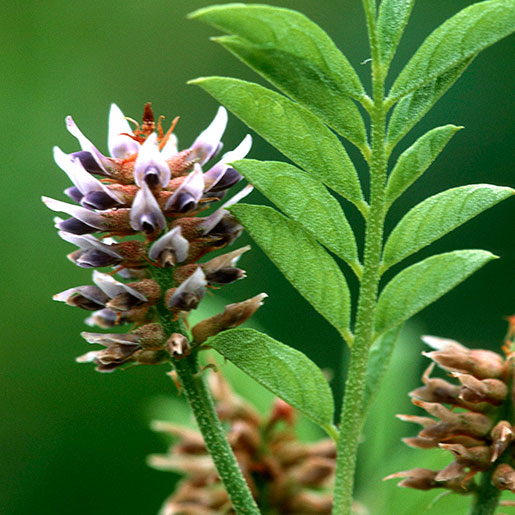
Common Names: licorice root, licorice, liquorice, sweet root, gan cao, gan zao, Chinese licorice
Latin Names: Glycyrrhiza glabra, Glycyrrhiza uralensis, Glycyrrhiza inflata
Background
- Licorice root is cultivated throughout Europe, Asia, and the Middle East. It is used as a flavoring in candy, other foods, beverages, and tobacco products.
- Many “licorice” products sold in the United States do not contain actual licorice. Anise oil, which smells and tastes like licorice, is often used instead.
- Licorice root has a long history of use, going back to ancient Assyrian, Egyptian, Chinese, and Indian cultures. It was used traditionally for treating a variety of conditions, including lung, liver, circulatory, and kidney diseases.
- Today, licorice root is promoted as a dietary supplement for conditions such as digestive problems, menopausal symptoms, cough, and bacterial and viral infections. Licorice gargles or lozenges have been used to try to prevent or reduce the sore throat that sometimes occurs after surgery. Licorice is also an ingredient in some products for topical use (application to the skin).
How Much Do We Know?
- Some studies of licorice root in people have been completed, but there isn’t enough high-quality evidence to clearly support its use for any health condition.
What Have We Learned?
- Some products that contain licorice root and other ingredients may help relieve digestive symptoms. Because these are combination products, the role of licorice in their effects is uncertain.
- There’s some evidence that topical gels containing licorice root might be helpful for atopic dermatitis symptoms. Atopic dermatitis, also called eczema, is a chronic disease in which skin becomes irritated, inflamed, and itchy.
- A small number of studies suggest that using a licorice gargle or lozenges before surgery might help to prevent or lessen the severity of the sore throat that often occurs after surgery.
What Do We Know About Safety?
- Although licorice root is generally considered safe as a food ingredient, it can cause serious side effects, including increased blood pressure and decreased potassium levels, when consumed in large amounts or for long periods of time. Because the composition of licorice products varies, it isn’t possible to definitely say that a particular level of intake is safe or unsafe. The effects of licorice on potassium and blood pressure are a particular concern for people with hypertension (high blood pressure) or heart or kidney disease.
- Some side effects of licorice are believed to be caused by a component called glycyrrhizic acid. Licorice that has had this substance removed (called DGL for deglycyrrhizinated licorice) may not have the same degree of side effects.
- Heavy consumption of licorice during pregnancy has been associated with premature birth and health problems in the child. Little is known about whether it’s safe to use licorice root while breastfeeding.
Keep in Mind
- Take charge of your health—talk with your health care providers about any complementary health approaches you use. Together, you can make shared, well-informed decisions.
NCCIH Clearinghouse
The NCCIH Clearinghouse provides information on NCCIH and complementary and integrative health approaches, including publications and searches of Federal databases of scientific and medical literature. The Clearinghouse does not provide medical advice, treatment recommendations, or referrals to practitioners.
Toll-free in the U.S.: 1-888-644-6226
Telecommunications relay service (TRS): 7-1-1
Website: https://www.nccih.nih.gov
Email: info@nccih.nih.gov (link sends email)
PubMed®
A service of the National Library of Medicine, PubMed® contains publication information and (in most cases) brief summaries of articles from scientific and medical journals. For guidance from NCCIH on using PubMed, see How To Find Information About Complementary Health Approaches on PubMed.
Website: https://pubmed.ncbi.nlm.nih.gov/
Office of Dietary Supplements (ODS), National Institutes of Health (NIH)
ODS seeks to strengthen knowledge and understanding of dietary supplements by evaluating scientific information, supporting research, sharing research results, and educating the public. Its resources include publications (such as Dietary Supplements: What You Need To Know) and fact sheets on a variety of specific supplement ingredients and products (such as vitamin D and multivitamin/mineral supplements).
Website: https://ods.od.nih.gov
Email: ods@nih.gov (link sends email)
Key References
- Armanini D, Fiore C, Bielenberg J, et al. Licorice. In: Coates PM, Betz JM, Blackman MR, et al., eds. Encyclopedia of Dietary Supplements. 2nd ed. New York, NY: Informa Healthcare; 2010:479-486.
- Kuriyama A, Maeda H. Topical application of licorice for prevention of postoperative sore throat in adults: a systematic review and meta-analysis. Journal of Clinical Anesthesia. 2019;54:25-32.
- Licorice. Natural Medicines website. Accessed at naturalmedicines.therapeuticresearch.com on March 5, 2020. [Database subscription].
- Nazari S, Rameshrad M, Hosseinzadeh H. Toxicological effects of Glycyrrhiza glabra (licorice): a review. Phytotherapy Research. 2017;31(11):1635-1650.
- Penninkilampi R, Eslick EM, Eslick GD. The association between consistent licorice ingestion, hypertension and hypokalaemia: a systematic review and meta-analysis. Journal of Human Hypertension. 2017;31(11):699-707.
This publication is not copyrighted and is in the public domain. Duplication is encouraged.
NCCIH has provided this material for your information. It is not intended to substitute for the medical expertise and advice of your health care provider(s). We encourage you to discuss any decisions about treatment or care with your health care provider. The mention of any product, service, or therapy is not an endorsement by NCCIH.