 An official website of the United States government
Ginkgo
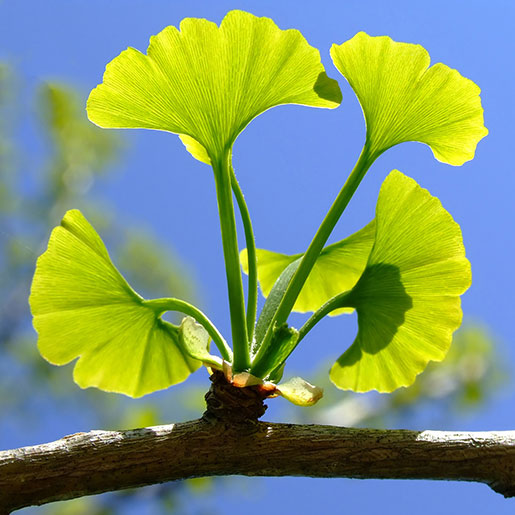
Common Names: ginkgo, Ginkgo biloba, fossil tree, maidenhair tree, Japanese silver apricot, baiguo, yinhsing
Latin Names: Ginkgo biloba
Background
- Ginkgo, one of the oldest living tree species in the world, has a long history in traditional Chinese medicine. Members of the royal court were given ginkgo nuts for senility. Other historical uses for ginkgo were for asthma, bronchitis, and kidney and bladder disorders.
- Today, the extract from ginkgo leaves is promoted as a dietary supplement for many conditions, including anxiety, allergies, dementia, eye problems, peripheral artery disease (when buildup of plaque narrows the blood vessels that carry blood to the head, organs, and limbs), tinnitus, and other health problems.
How Much Do We Know?
- There have been a lot of studies on the possible health effects and risks of people using ginkgo.
What Have We Learned?
- There’s no conclusive evidence that ginkgo is helpful for any health condition. Although some studies suggest that ginkgo may help to slightly improve some symptoms of dementia, the findings have been described as unreliable. Also, other studies have had conflicting findings. Ginkgo neither helps prevent dementia or cognitive decline nor prevents Alzheimer’s-related dementia from getting worse—this is according to studies that include the long-term Ginkgo Evaluation of Memory Study, which enrolled more than 3,000 older adults and was funded in part by the National Center for Complementary and Integrative Health (NCCIH).
- For various health conditions, a small amount of evidence suggests a benefit from taking ginkgo, but the overall evidence is not conclusive. These conditions include anxiety, diabetic retinopathy, glaucoma, peripheral artery disease, premenstrual syndrome (PMS), schizophrenia, and vertigo.
- Research seems to suggest that ginkgo doesn’t help with memory enhancement in healthy people, high blood pressure, tinnitus, multiple sclerosis, seasonal affective disorder, or the risk of having a heart attack or stroke.
What Do We Know About Safety?
- For most people, ginkgo leaf extract appears to be safe when taken by mouth in moderate amounts.
- Side effects of ginkgo may include headache, stomach upset, dizziness, palpitations, constipation, and allergic skin reactions. If you have a known bleeding risk, you should be cautious about ginkgo possibly increasing your risk of bleeding.
- In a 2013 research study, rodents given ginkgo leaf extract had an increased risk of developing liver and thyroid cancer at the end of the 2-year tests. Whether these results apply to humans is unclear.
- Ginkgo may interact with some conventional medications, including anticoagulants (blood thinners), research reviews show.
- Ginkgo taken orally may be unsafe during pregnancy. It might cause early labor or extra bleeding during delivery if used near that time. Little is known about whether it’s safe to use ginkgo while breastfeeding.
- Fresh (raw) or roasted ginkgo seeds and the unprocessed ginkgo leaves can contain dangerous amounts of a toxic substance.
Keep in Mind
- Take charge of your health—talk with your health care providers about any complementary health approaches you use. Together, you can make shared, well-informed decisions.
NCCIH Clearinghouse
The NCCIH Clearinghouse provides information on NCCIH and complementary and integrative health approaches, including publications and searches of Federal databases of scientific and medical literature. The Clearinghouse does not provide medical advice, treatment recommendations, or referrals to practitioners.
Toll-free in the U.S.: 1-888-644-6226
Telecommunications relay service (TRS): 7-1-1
Website: https://www.nccih.nih.gov
Email: info@nccih.nih.gov (link sends email)
PubMed®
A service of the National Library of Medicine, PubMed® contains publication information and (in most cases) brief summaries of articles from scientific and medical journals. For guidance from NCCIH on using PubMed, see How To Find Information About Complementary Health Approaches on PubMed.
Website: https://pubmed.ncbi.nlm.nih.gov/
Office of Dietary Supplements (ODS), National Institutes of Health (NIH)
ODS seeks to strengthen knowledge and understanding of dietary supplements by evaluating scientific information, supporting research, sharing research results, and educating the public. Its resources include publications (such as Dietary Supplements: What You Need To Know) and fact sheets on a variety of specific supplement ingredients and products (such as vitamin D and multivitamin/mineral supplements).
Website: https://ods.od.nih.gov
Email: ods@nih.gov (link sends email)
Key References
- Asher GN, Corbett AH, Hawke RL. Common herbal dietary supplement-drug interactions. American Family Physician. 2017;96(2):101-107.
- Ginkgo. Natural Medicines website. Accessed at naturalmedicines.therapeuticresearch.com on March 9, 2020. [Database subscription].
- Kang JM, Lin S. Ginkgo biloba and its potential role in glaucoma. Current Opinion in Ophthalmology. 2018;29(2):116-120.
- Quidel Kramer F, Ortigoza Á. Ginkgo biloba for the treatment of tinnitus. Medwave. 2018;18(6):e7295.
- Strømgaard K, Vogensen SB, Steet J, et al. Ginkgo. In: Coates PM, Betz JM, Blackman MR, et al., eds. Encyclopedia of Dietary Supplements, 2nd ed. New York, NY: Informa Healthcare; 2010:332-338.
- Yang G, Wang Y, Sun J, et al. Ginkgo biloba for mild cognitive impairment and Alzheimer’s disease: a systematic review and meta-analysis of randomized controlled trials. Current Topics in Medicinal Chemistry. 2016;16(5):520-528.
This publication is not copyrighted and is in the public domain. Duplication is encouraged.
NCCIH has provided this material for your information. It is not intended to substitute for the medical expertise and advice of your health care provider(s). We encourage you to discuss any decisions about treatment or care with your health care provider. The mention of any product, service, or therapy is not an endorsement by NCCIH.