 An official website of the United States government
Dandelion
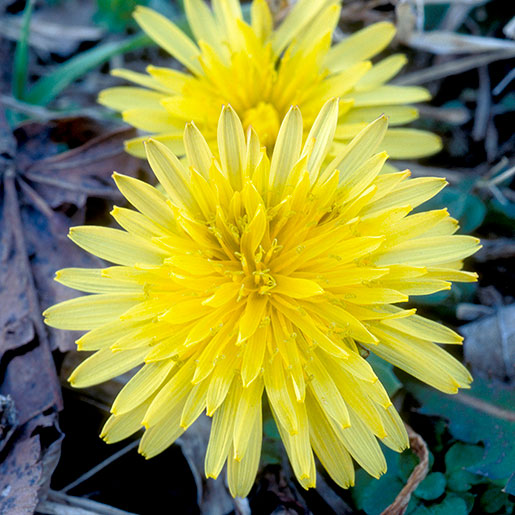
Common Names: dandelion, lion’s tooth, blowball
Latin Names: Taraxacum officinale
Background
- Dandelion is native to Europe but found throughout temperate regions in the Northern Hemisphere. The leaves, flowers, and root of the plant have traditionally been used in Mexican and other North American medicine.
- Today, dandelion is promoted as a “tonic,” as a diuretic, and for a variety of conditions, including infections and digestive symptoms. As a food, dandelion is used as a salad green and in soups, wine, and teas. The roasted root is used as a coffee substitute.
How Much Do We Know?
- We know very little about dandelion’s health effects. There’s little scientific evidence on this herb.
What Have We Learned?
- There’s no compelling scientific evidence supporting the use of dandelion for any health condition.
What Do We Know About Safety?
- The use of dandelion in the amounts commonly found in food is generally considered safe. Less is known about the safety of taking it in larger amounts. Some people are allergic to dandelion; allergic reactions may be more likely in people who are allergic to related plants such as ragweed, chrysanthemums, marigolds, and daisies.
- Little is known about whether it’s safe to use dandelion in amounts greater than those in foods during pregnancy or while breastfeeding.
Keep in Mind
- Take charge of your health—talk with your health care providers about any complementary health approaches you use. Together, you can make shared, well-informed decisions.
NCCIH Clearinghouse
The NCCIH Clearinghouse provides information on NCCIH and complementary and integrative health approaches, including publications and searches of Federal databases of scientific and medical literature. The Clearinghouse does not provide medical advice, treatment recommendations, or referrals to practitioners.
Toll-free in the U.S.: 1-888-644-6226
Telecommunications relay service (TRS): 7-1-1
Website: https://www.nccih.nih.gov
Email: info@nccih.nih.gov (link sends email)
PubMed®
A service of the National Library of Medicine, PubMed® contains publication information and (in most cases) brief summaries of articles from scientific and medical journals. For guidance from NCCIH on using PubMed, see How To Find Information About Complementary Health Approaches on PubMed.
Website: https://pubmed.ncbi.nlm.nih.gov/
Office of Dietary Supplements (ODS), National Institutes of Health (NIH)
ODS seeks to strengthen knowledge and understanding of dietary supplements by evaluating scientific information, supporting research, sharing research results, and educating the public. Its resources include publications (such as Dietary Supplements: What You Need To Know) and fact sheets on a variety of specific supplement ingredients and products (such as vitamin D and multivitamin/mineral supplements).
Website: https://ods.od.nih.gov
Email: ods@nih.gov (link sends email)
Key References
- Dandelion. Natural Medicines website. Accessed at naturalmedicines.therapeuticresearch.com on October 10, 2019. [Database subscription].
This publication is not copyrighted and is in the public domain. Duplication is encouraged.
NCCIH has provided this material for your information. It is not intended to substitute for the medical expertise and advice of your health care provider(s). We encourage you to discuss any decisions about treatment or care with your health care provider. The mention of any product, service, or therapy is not an endorsement by NCCIH.