 An official website of the United States government
Cranberry
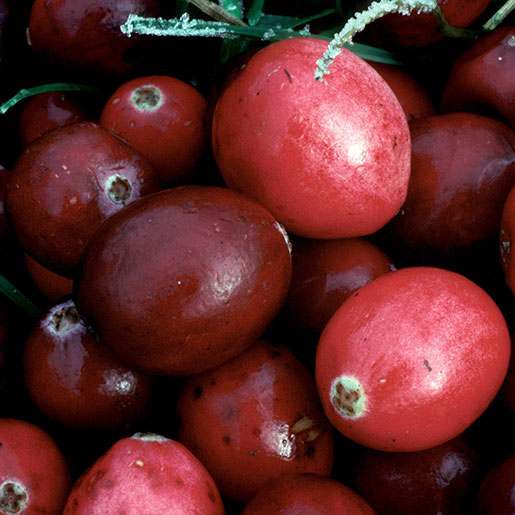
Common Names: cranberry, American cranberry, bearberry
Latin Names: Vaccinium macrocarpon (also known as Oxycoccus macrocarpos), Vaccinium oxycoccos
Background
- Cranberry is an evergreen shrub that grows in wet habitats in the Northeastern and North Central parts of the United States.
- Historically, cranberry fruits or leaves were used for bladder, stomach, and liver disorders, as well as diabetes, wounds, and other conditions.
- Today, cranberry is most commonly promoted for urinary tract infections (UTIs).
How Much Do We Know?
- There have been many studies in people of cranberry for UTIs, but there’s little research on cranberry for other conditions.
What Have We Learned?
- In general, studies in people who are at increased risk for UTIs or those who have had recurrent UTIs show that cranberry products decrease the risk of UTIs by about one-third. However, there’s still some uncertainty about the effectiveness of cranberry because some of the research has not been of high quality. Also, studies in certain populations at increased risk of UTIs, such as elderly people in long-term care and pregnant women, have had inconsistent results, and studies in other high-risk populations, such as women undergoing gynecological surgeries or people with multiple sclerosis, have not found cranberry to be beneficial.
- In 2020, the U.S. Food and Drug Administration announced that it would permit manufacturers to claim on product labels that there is “limited” evidence that daily consumption of specified amounts of cranberry dietary supplements may reduce the risk of recurrent UTI in healthy women who have had a UTI. A similar claim may be made for cranberry juice beverages, but the evidence must be described as “limited and inconsistent.”
- Cranberry hasn’t been shown to be effective as a treatment for an existing UTI.
- NCCIH-supported research is looking at the effects of polyphenols from cranberry and other fruits and vegetables on the gut microbiome, to see whether these effects may play a role in the association between consumption of these foods and reduced risk of chronic diseases.
What Do We Know About Safety?
- Cranberry products are generally thought to be safe. However, if consumed in very large amounts, they can cause stomach upset and diarrhea, particularly in young children.
- Little is known about whether it’s safe to use cranberry for health purposes during pregnancy or while breastfeeding.
- There is conflicting evidence about whether cranberry interacts with the anticoagulant (blood thinner) warfarin.
- People who think they have a UTI should see a health care provider for diagnosis and treatment. Don’t use cranberry products in place of proven treatment for a UTI.
Keep in Mind
- Take charge of your health—talk with your health care providers about any complementary health approaches you use. Together, you can make shared, well-informed decisions.
NCCIH Clearinghouse
The NCCIH Clearinghouse provides information on NCCIH and complementary and integrative health approaches, including publications and searches of Federal databases of scientific and medical literature. The Clearinghouse does not provide medical advice, treatment recommendations, or referrals to practitioners.
Toll-free in the U.S.: 1-888-644-6226
Telecommunications relay service (TRS): 7-1-1
Website: https://www.nccih.nih.gov
Email: info@nccih.nih.gov (link sends email)
PubMed®
A service of the National Library of Medicine, PubMed® contains publication information and (in most cases) brief summaries of articles from scientific and medical journals. For guidance from NCCIH on using PubMed, see How To Find Information About Complementary Health Approaches on PubMed.
Website: https://pubmed.ncbi.nlm.nih.gov/
Office of Dietary Supplements (ODS), National Institutes of Health (NIH)
ODS seeks to strengthen knowledge and understanding of dietary supplements by evaluating scientific information, supporting research, sharing research results, and educating the public. Its resources include publications (such as Dietary Supplements: What You Need To Know) and fact sheets on a variety of specific supplement ingredients and products (such as vitamin D and multivitamin/mineral supplements).
Website: https://ods.od.nih.gov
Email: ods@nih.gov (link sends email)
Key References
- Cranberry. Natural Medicines website. Accessed at naturalmedicines.therapeuticresearch.com on October 10, 2019. [Database subscription.]
- Fu Z, Liska D, Talan D, et al. Cranberry reduces the risk of urinary tract infection recurrence in otherwise healthy women: a systematic review and meta-analysis. Journal of Nutrition. 2017;147(12):2282-2288.
- Jepson RG, Mihaljevic L, Craig JC. Cranberries for treating urinary tract infections. Cochrane Database of Systematic Reviews. 2000;(4):CD001322. Accessed at https://www.cochranelibrary.com/ on November 7, 2019.
- Klein MA. Cranberry. In: Coates PM, Betz JM, Blackman MR, et al., eds. Encyclopedia of Dietary Supplements. 2nd ed. New York, NY: Informa Healthcare; 2010:193-201.
- Luís Â, Domingues F, Pereira L. Can cranberries contribute to reduce the incidence of urinary tract infections? A systematic review with meta-analysis and trial sequential analysis of clinical trials. Journal of Urology. 2017;198(3):614-621.
- Mantzorou M, Gigaginis C. Cranberry consumption against urinary tract infections: clinical state-of-the-art and future perspectives. Current Pharmaceutical Biotechnology. 2018;19(13):1049-1063.
- Nicolle LE. Cranberry for prevention of urinary tract infection? Time to move on. JAMA. 2016;316(18):1873-1874.
- Sihra N, Goodman A, Zakri R, et al. Nonantibiotic prevention and management of recurrent urinary tract infection. Nature Reviews. Urology. 2018;15(12):750-776.
- U.S. Food and Drug Administration. Letter of Enforcement Discretion. Cranberry Juice Beverages and Cranberry Dietary Supplements and Reduced Risk of Recurrent Urinary Tract Infection in Healthy Women. July 21, 2020.
This publication is not copyrighted and is in the public domain. Duplication is encouraged.
NCCIH has provided this material for your information. It is not intended to substitute for the medical expertise and advice of your health care provider(s). We encourage you to discuss any decisions about treatment or care with your health care provider. The mention of any product, service, or therapy is not an endorsement by NCCIH.